

Yes. Many skylight leaks can be repaired without replacing the entire skylight. The right solution depends on whether the problem is caused by flashing, sealant, surrounding roofing materials, fasteners, or the skylight itself.
Skylight Repair
Skylight Repair Experts
Professional Skylight Leak Diagnosis and Repair Solutions Designed to Protect Your Skylight, Roofing System, and Home From Water Intrusion.
4.9 stars
127+ reviews
The #1 skylight repair company for homes and commercial use buildings





Professional skylight leak diagnosis and repair for shingle, slate, cedar, mmetal and tile roofing systems
A leaking skylight does not always mean the skylight needs to be replaced. On a sloped roof, water can enter through deteriorated flashing, failed sealants, damaged roofing materials, poorly installed components, or vulnerable transitions between the skylight and surrounding roof.
The location where water appears inside the home may not be where it is entering the roofing system. Water can travel beneath roofing materials, along underlayment, around flashing, or through the skylight opening before becoming visible indoors.
Roofer On Demand provides professional skylight repair for sloped roofs, including asphalt shingle, slate, cedar, metal, and Marley-style tile roofing systems. We assess the skylight together with the surrounding roof to identify the likely source of water intrusion before determining whether the appropriate solution is localized repair, flashing work, waterproofing, roofing repairs, or skylight replacement.
Can a Leaking Skylight on a Sloped Roof Be Repaired?
Yes. Many leaking skylights can be repaired without replacing the complete skylight.
The important question is why the skylight is leaking.
If the skylight itself remains in serviceable condition, the source may be deteriorated sealant, a flashing deficiency, damaged roofing material, an exposed fastener, or another localized waterproofing problem.
Depending on what we find, a skylight repair may involve:
- Professional resealing
- Flashing repairs
- Repairing flashing joints
- Replacing damaged roofing materials
- Correcting roofing-to-flashing transitions
- Addressing exposed or problematic fasteners
- Repairing localized waterproofing deficiencies
- Correcting previous repair work
- Reconstructing sections around the skylight where required
When the skylight itself has significantly deteriorated, has failed glass, is damaged, or has reached a condition where further repairs are unlikely to provide reasonable long-term value, replacement may be recommended instead.
Common Skylight Problems We Repair
Skylight leaks can develop for many different reasons. Identifying the actual failure point is important because simply applying sealant around the outside of a skylight may temporarily hide a problem without addressing its cause.
Deteriorated Skylight Sealant
Exterior sealants naturally deteriorate as they are exposed to sunlight, rain, snow, ice, temperature changes, and movement of roofing materials.
When a sealable joint is determined to be the source of water intrusion, deteriorated material can be removed or prepared and replaced with an appropriate high-grade roofing sealant.
Skylight Flashing Leaks
Flashing is responsible for directing water around the skylight and back onto the roofing surface.
Improper installation, physical damage, corrosion, movement, previous repairs, or deterioration of flashing components can create vulnerable areas where water enters the roofing assembly.
Depending on the condition, localized flashing may be repaired or a more extensive flashing correction may be required.
Roofing Material and Flashing Separation
The transition between the roofing material and skylight flashing is particularly important.
On asphalt roofs, shingles must properly overlap and integrate with the flashing system. Slate, cedar, metal, and tile roofs each require flashing details that suit the roofing material and drainage pattern.
Movement, poor installation, deterioration, or previous repairs can create openings at these transitions.
Glass and Frame Leaks
Not every skylight leak originates from the surrounding roof.
Water can sometimes enter through deteriorated seals or joints between the glass and metal frame or through other exterior skylight components.
When appropriate, these areas may be professionally cleaned, prepared, and resealed using a compatible high-grade sealant.
Damaged Roofing Around the Skylight
Cracked, missing, lifted, deteriorated, or incorrectly installed roofing materials around a skylight can allow water beneath the roofing surface.
The skylight may appear to be leaking even though the actual entry point is in the surrounding roof.
Previous Skylight Repairs
Older skylights sometimes have several generations of roofing cement, silicone, caulking, tape, coatings, or other patching materials applied around them.
These repairs can deteriorate and can also make it more difficult to determine the original source of the leak.
Where practical, problematic previous repair materials may need to be removed or properly prepared before a more appropriate repair can be completed.
Problems Above the Skylight
Water always needs to be considered in relation to roof slope and drainage.
A damaged roofing material, flashing detail, roof penetration, metal transition, or another deficiency located above the skylight may allow water beneath the roofing system. The water can then travel downward and appear around the skylight opening.
This is one reason we do not automatically assume that the skylight itself is leaking.
How We Diagnose a Skylight Leak
A proper skylight repair begins with diagnosis.
We inspect the skylight as part of the surrounding roofing system rather than looking only at the visible skylight frame.
Our assessment may include the condition of:
- Skylight glass and frame
- Exterior seals and joints
- Head flashing
- Side flashing
- Sill flashing
- Roofing materials surrounding the skylight
- Roofing materials above the skylight
- Visible underlayment where accessible
- Exposed fasteners
- Previous repair materials
- Roof penetrations or transitions near the skylight
- The skylight curb, where applicable
- Interior evidence of water intrusion where accessible
The objective is to determine the most likely water-entry point and water path before recommending a repair.
Our Sloped Roof Skylight Repair Process
The exact repair depends on the skylight and roofing system, but our general process follows the same principle: diagnose first and repair the component or transition responsible for the problem.
1. Skylight & Roof Assessment
We inspect the skylight and surrounding roofing materials for visible deterioration, damage, installation deficiencies, previous repairs, and potential water-entry points.
2. Identify the Likely Source
We determine whether the problem appears to originate from the skylight, flashing, sealant, roofing material, fasteners, or another nearby roof detail.
Because water can travel beneath roofing materials, the inspection may extend above and around the skylight rather than concentrating only on the location where water appears indoors.
3. Determine Whether Repair Is Practical
We assess whether the existing skylight remains a reasonable candidate for repair.
The skylight’s condition, age, roofing system, previous repairs, and extent of the deficiency are considered before determining whether localized repair or replacement is more appropriate.
4. Prepare the Repair Area
Loose, failed, or deteriorated materials are removed or prepared as required.
Surfaces receiving sealant or other repair materials must be appropriately prepared so the new material can properly adhere and perform.
5. Complete the Required Repair
Depending on the diagnosed problem, work may include:
- High-grade roofing sealant
- Flashing repairs
- Flashing-joint repairs
- Roofing material replacement
- Localized waterproofing
- Fastener corrections
- Glass-to-frame resealing
- Repairs to previously patched areas
- More extensive reconstruction where required
The repair method is selected according to the actual roof and skylight condition rather than applying the same repair to every skylight.
6. Inspect the Completed Work
The repaired area is reviewed to confirm that the affected components and surrounding roofing have been properly addressed.
7. Document the Repair
Where appropriate, project photographs can document the condition observed and work completed.
Skylight Repair on Different Sloped Roofing Systems
The roofing material surrounding a skylight plays an important role in how water is managed around the opening. Repair methods therefore need to account for the construction, movement, overlap, and drainage characteristics of the existing roofing system.
Skylight Repair on Asphalt Shingle Roofs
Asphalt shingles are one of the most common roofing systems surrounding residential skylights.
A properly integrated skylight generally relies on overlapping layers of shingles, flashing, and underlying waterproofing to direct water around the opening.
Potential problems can include:
- Damaged or missing shingles
- Improperly positioned shingles
- Deteriorated shingle edges
- Failed or displaced flashing
- Exposed fasteners
- Incorrectly installed flashing
- Deteriorated sealant
- Previous patch repairs
- Problems with roofing located above the skylight
Where the skylight remains serviceable, repairs may involve replacing localized shingles, correcting flashing transitions, repairing vulnerable joints, resealing appropriate areas, or reconstructing part of the surrounding roofing assembly.
Skylight Repair on Slate Roofs
Slate roofing requires a different repair approach from conventional asphalt shingles.
Individual slate pieces are rigid and can crack or break when improperly handled. Skylight flashing must also integrate correctly with the slate courses so water can drain around the opening without becoming trapped behind the roofing.
When investigating a skylight leak on a slate roof, we may evaluate:
- Broken or displaced slate
- Flashing beneath and between slate courses
- Head flashing above the skylight
- Side flashing
- Previous repair materials
- Fasteners
- Conditions higher on the roof that may be directing water toward the skylight
Repairs must account for the existing slate system rather than treating the roof like a conventional asphalt shingle installation.
Skylight Repair on Cedar Roofs
Cedar shakes and cedar shingles create another distinct roofing environment around a skylight.
The thickness, exposure, movement, and drainage characteristics of cedar roofing must be considered when repairing flashing around a skylight.
Common concerns may include deteriorated cedar, split or damaged pieces, flashing deficiencies, previous patching, and vulnerable transitions around the skylight.
Where individual cedar pieces need to be removed to access flashing, the surrounding roof must be carefully reinstated and integrated after the repair.
The objective is to preserve the intended drainage pattern of the cedar roofing system while addressing the actual skylight or flashing deficiency.
Skylight Repair on Metal Roofs
Metal roofing systems require careful diagnosis because their flashing details differ substantially from shingles, slate, cedar, and tile roofing.
Depending on the metal roofing system, skylight problems can involve:
- Metal flashing transitions
- Fasteners
- Seams
- Sealants
- Expansion and contraction
- Improperly fabricated flashing
- Water being directed toward the skylight
- Previous patching
- Incompatible repair materials
Metal expands and contracts as temperatures change, which makes the selection and placement of sealants and flashing details particularly important.
A repair must accommodate the existing metal roofing system and its movement rather than simply sealing every visible joint.
Some metal roof skylight installations may also require custom-fabricated flashing because standard flashing components may not be compatible with the roof profile or existing construction.
Skylight Repair on Marley Tile and Concrete Tile Roofs
Marley-style and other concrete tile roofing systems require specialized attention around skylights because the tiles have a substantially different profile and drainage pattern from asphalt shingles.
The skylight flashing must integrate with the shape, overlap, and water channels of the surrounding tile system.
Potential problems can include:
- Cracked or displaced tiles
- Improper flashing
- Deteriorated underlayment
- Poor transitions around the skylight
- Failed sealants
- Water entering beneath the tile system
- Previous repairs that interfere with drainage
Because the visible roof tiles are only one part of the overall roofing assembly, diagnosing a leak may require consideration of both the tile and the waterproofing system beneath it.
Repairs should preserve the intended drainage path while addressing the deficient flashing, roofing material, underlayment, or skylight component.
Is Caulking a Skylight a Proper Repair?
Yes, when sealant failure is actually part of the problem.
Caulking has developed a poor reputation in roofing largely because it is sometimes used as a quick fix without first identifying why a skylight is leaking.
Professional-grade roofing sealant can be a legitimate component of a skylight repair when it is used in an appropriate location and the underlying roofing and flashing remain serviceable.
Depending on the skylight and roofing system, high-grade sealant may be used at appropriate locations such as:
- Certain flashing joints
- Roofing-to-flashing interfaces
- Glass-to-metal frame joints
- Exterior skylight joints
- Certain fasteners or penetrations
- Other compatible sealable transitions
However, sealant should not be used as a substitute for failed flashing, damaged roofing, deteriorated underlayment, or an improperly installed skylight.
If the underlying assembly has failed, covering the area with additional caulking may provide only temporary protection and can sometimes make future repairs more difficult.
The objective of a professional repair is to address the reason water is entering rather than simply covering the visible area where a leak is suspected.
Why Do Skylights Leak During Heavy Rain?
A skylight that leaks only during heavy or wind-driven rain may have a vulnerability that is not exposed during lighter rainfall.
Higher volumes of water can place greater demand on flashing and drainage details, while wind can push water into vulnerable joints or transitions around the skylight.
Possible causes include:
- Flashing deficiencies
- Failed sealants
- Damaged roofing materials
- Water entering higher on the roof
- Improper roof-to-skylight transitions
- Previous repair failures
- Drainage problems around the skylight
The fact that a skylight leaks only during heavy rain does not necessarily mean the skylight itself has failed.
Why Does My Skylight Leak During Winter?
Winter skylight problems can involve several different conditions.
Snow and ice accumulation can change how water moves across the roof and around the skylight. Melting snow can also expose flashing or roofing deficiencies that may not become apparent during ordinary rainfall.
Interior condensation can sometimes be mistaken for a roofing or skylight leak as well.
Determining whether moisture originates from the exterior roofing system or from indoor condensation is an important part of diagnosing winter skylight concerns.
Skylight Leak or Condensation?
Water around a skylight does not always originate outside.
Warm, humid interior air can contact colder skylight glass, frames, or surrounding surfaces and form condensation. This is particularly common during colder weather.
Signs of condensation can include moisture forming directly on the interior glass or recurring moisture during periods of elevated indoor humidity.
A roofing leak is more likely to correspond with rainfall, melting snow, or other exterior weather conditions, although the symptoms are not always straightforward.
The source should be investigated before assuming that the roof or skylight itself requires repair.
Skylight Flashing Repair
Flashing is one of the most important components of a skylight installation.
Its purpose is not simply to cover the perimeter of the skylight. The flashing must work with the surrounding roofing system to create a drainage path that directs water around the opening and back onto the roof surface.
Head Flashing
Head flashing is positioned above the skylight and helps divert water approaching from higher areas of the roof around the skylight opening.
Side and Step Flashing
Side flashing, including step flashing where applicable, helps move water down each side of the skylight while integrating with the surrounding roofing material.
Sill Flashing
Sill flashing at the lower edge of the skylight helps return water onto the roofing surface so it can continue draining down the roof.
If any of these components have been improperly installed, damaged, displaced, deteriorated, or previously altered, water may enter the roofing assembly.
The appropriate repair depends on whether the flashing can be locally corrected or whether portions of the surrounding roofing must be removed so the flashing detail can be properly rebuilt.
Can a Skylight Be Repaired Without Removing Roofing Materials?
Sometimes.
A localized sealant repair or accessible flashing correction may not require significant removal of the surrounding roofing system.
However, if the deficiency is concealed beneath shingles, slate, cedar, metal, or tile, roofing materials may need to be carefully removed to access the affected flashing, underlayment, or waterproofing detail.
We do not recommend avoiding necessary roofing removal simply to make a repair less invasive. If the failed component is concealed beneath the roof covering, accessing it may be necessary to complete a more appropriate repair.
Temporary vs. More Extensive Skylight Repairs
Not every skylight repair involves the same level of work.
A localized repair may be appropriate when a specific vulnerable area can be identified and addressed without dismantling a significant portion of the surrounding roofing system.
Other conditions may require removal of roofing materials and reconstruction of flashing, waterproofing, or roofing details around the skylight.
In some situations, a temporary repair may also be appropriate when weather, roof conditions, material availability, or the condition of the skylight prevents a more extensive repair from being completed immediately.
The proposed scope, expected level of repair, and any limitations should be explained before work proceeds.
Skylight Repair vs. Skylight Replacement
Our first question is not automatically “Which skylight should replace this one?”
It is “Can the existing skylight still be reasonably repaired?”
Skylight Repair May Be Appropriate When:
- The skylight remains in good overall condition
- The glass and frame remain serviceable
- The leak has an identifiable and repairable source
- Flashing can reasonably be repaired or corrected
- Surrounding roofing damage is localized
- The skylight still has reasonable remaining service life
Skylight Replacement May Be More Appropriate When:
- The skylight is significantly aged
- The insulated glass has failed
- The frame or glass is damaged
- Significant deterioration is present
- The existing installation has major deficiencies
- Previous repairs continue to fail
- Repair costs no longer provide reasonable long-term value
- The surrounding roof is being replaced and the skylight has limited remaining service life
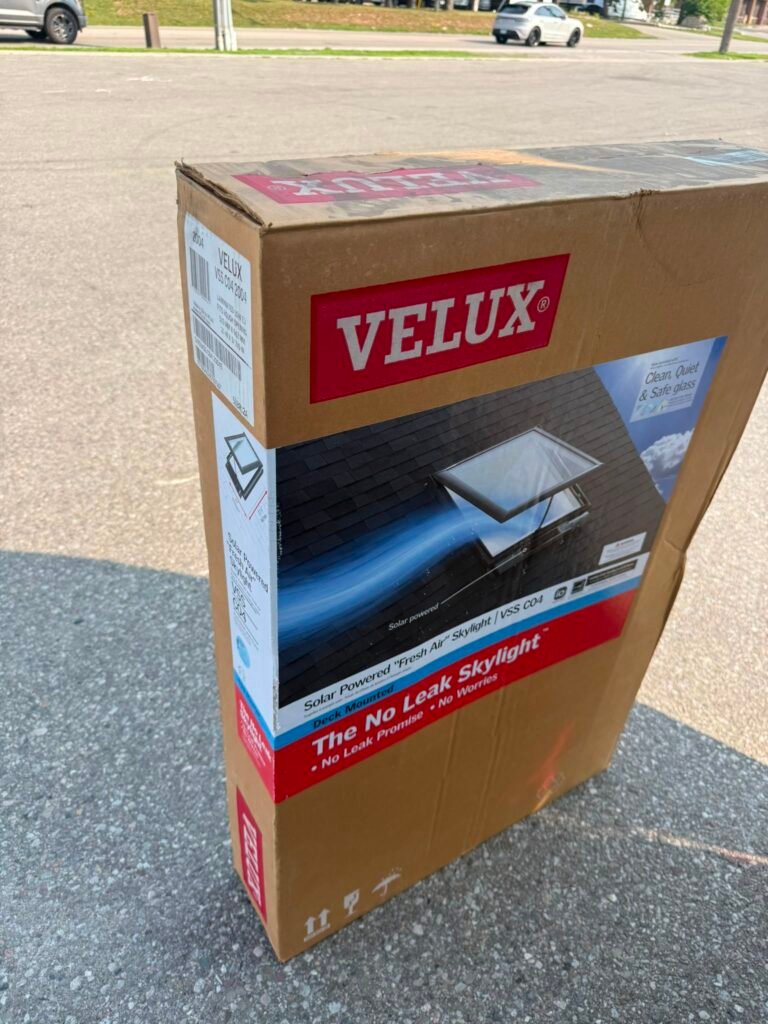
When replacement is recommended, Roofer On Demand uses VELUX skylights, with VELUX manufacturer flashing wherever the roofing system and installation configuration permit. Custom flashing may be required for certain roofing materials, profiles, or unusual configurations.
What Affects the Cost of Skylight Repair?
There is no single price for every skylight repair because the visible symptom does not necessarily show how extensive the underlying problem may be.
Skylight repair cost can be affected by:
- Roofing system
- Skylight type
- Roof height
- Roof pitch
- Accessibility
- Skylight location
- Type and condition of flashing
- Extent of roofing removal required
- Condition of surrounding shingles, slate, cedar, metal, or tile
- Previous repair work
- Condition of the skylight itself
- Custom flashing requirements
- Amount of waterproofing work required
- Number of skylights requiring repair
A straightforward exterior resealing repair is very different from removing roofing materials and reconstructing flashing around a skylight.
That is why we prefer to inspect the condition first and recommend the appropriate scope based on what is actually required.
Why Choose Roofer On Demand for Skylight Repair?
A skylight leak needs to be assessed as part of the complete roofing and waterproofing system.
Roofer On Demand approaches skylight repairs by considering the skylight, flashing, surrounding roofing materials, drainage pattern, and visible waterproofing details as one interconnected system.
Diagnosis Before Repair
We assess the skylight, flashing, roofing materials, and surrounding conditions before deciding what type of repair is appropriate.
Experience With Different Roofing Systems
Our repair approach accounts for the differences between asphalt shingles, slate, cedar, metal, and tile roofing systems rather than treating every skylight installation the same way.
Appropriate Repair Materials
Where professional-grade roofing sealants are appropriate, we use them as part of the repair. Where flashing, roofing materials, underlayment, or waterproofing require correction, those components are addressed accordingly.
Repair When Repair Makes Sense
A leaking skylight does not automatically mean replacement. When the existing skylight remains a reasonable repair candidate, we can recommend an appropriate repair solution.
Replacement When Necessary
When the skylight has reached a condition where continued repair provides poor long-term value, we can recommend an appropriate VELUX skylight replacement and explain why replacement may be the better option.
Clear Scope of Work
We explain the observed condition, proposed repair, and what is included so property owners understand the work being recommended.
Project Documentation
Where applicable, photographs can document the skylight condition, roofing details, and repair work completed.
Recent Skylight Repair Projects
Explore real skylight repair projects completed by Roofer On Demand on asphalt shingle, slate, cedar, metal, and tile roofing systems. These projects demonstrate the conditions identified, the repair methods used, and how each skylight repair was integrated with the surrounding roof.
Frequently Asked Questions
Common causes include failed flashing, deteriorated sealant, damaged roofing around the skylight, exposed fasteners, or water entering higher on the roof and travelling toward the skylight opening.
Yes. If the skylight remains in good overall condition, localized repairs may be possible. These can include resealing, flashing repairs, roofing material replacement, or correction of surrounding waterproofing details.
Yes, when sealant failure is actually part of the problem. We may use high-grade roofing sealant at appropriate joints, flashing transitions, or glass-to-frame interfaces, but we do not use caulking as a substitute for failed flashing or damaged roofing.
Yes. Depending on the condition, skylight flashing may be repaired, corrected, or partially reconstructed. If the flashing problem is more extensive, surrounding roofing materials may need to be removed to properly access and rebuild the area.
Yes. We repair skylights on asphalt shingle roofs, including problems involving step flashing, shingles, sealants, fasteners, and the transition between the skylight and surrounding roofing system.
Yes. Slate skylight repairs require careful handling because individual slate pieces can crack or break. The repair method must account for the existing slate, flashing, and water-drainage pattern around the skylight.
Yes. We can assess and repair skylights installed on cedar shake and cedar shingle roofs. These repairs may involve cedar replacement, flashing corrections, resealing, or reconstruction of the roofing around the skylight.
Yes. Metal roof skylight repairs can involve flashing, seams, fasteners, sealants, and custom metal transitions. The repair has to account for the expansion and contraction of the metal roofing system.
Yes. Tile-roof skylight repairs may involve cracked or displaced tiles, flashing problems, underlayment issues, or failed transitions around the skylight. The repair method must work with both the tile and the waterproofing system beneath it.
Heavy or wind-driven rain can expose flashing or waterproofing deficiencies that may not leak during lighter rainfall. Water may also enter higher on the roof and travel underneath the roofing before appearing around the skylight.
Winter leaks may be caused by melting snow, ice buildup, flashing problems, or changes in roof drainage. In some cases, interior condensation can also be mistaken for a skylight leak.
Condensation usually forms on the interior glass or frame during cold weather or periods of high indoor humidity. A roof or skylight leak is more likely to appear during rain, melting snow, or other exterior weather conditions.
Sometimes. Localized sealant or accessible flashing repairs may not require much removal. If the problem is beneath shingles, slate, cedar, metal, or tile, roofing materials may need to be removed to properly reach the failed component.
Repair may make sense when the skylight remains serviceable and the problem is localized. Replacement may be more appropriate when the skylight is significantly aged, damaged, has failed glass, or has had repeated repair problems. Roofer On Demand assesses the condition before recommending the next step.
Need Help With a Leaking Skylight?
Roofer On Demand can assess your skylight and surrounding roofing system, identify the likely source of the problem, and recommend the appropriate repair or replacement solution. Contact us today to schedule your skylight assessment.