
A leaking roof can often be repaired when the problem is localized and the surrounding roofing system remains in serviceable condition. Replacement should be considered when deterioration is widespread, leaks occur repeatedly in different areas, underlying components are significantly damaged, or the roof has limited remaining service life.
Should You Repair or Replace a Leaking Roof?
A practical guide to deciding whether a leaking roof should be repaired or replaced, based on the source of the leak, extent of damage, roof age, overall condition and remaining service life.
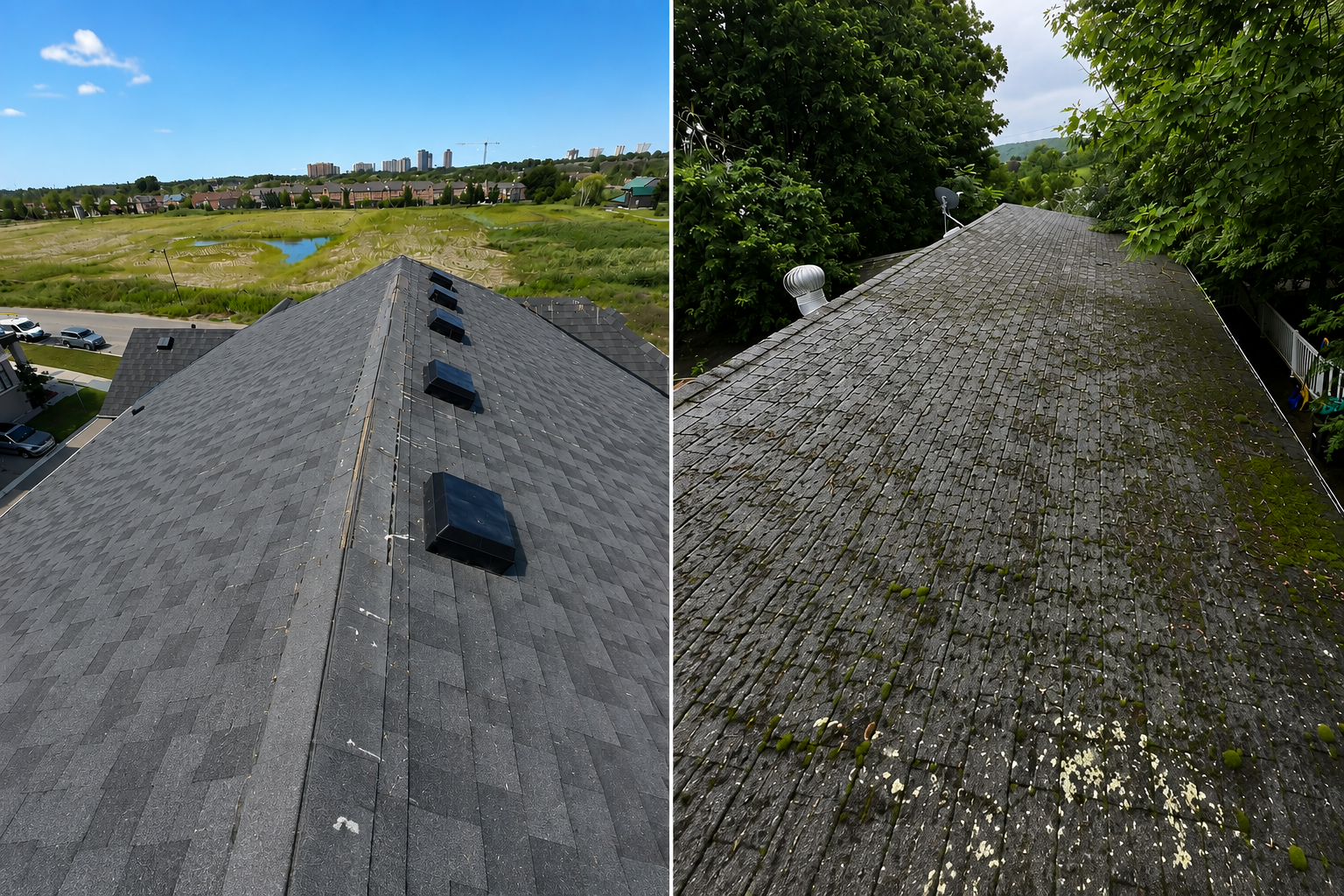
A leaking roof does not automatically mean you need a new roof. In many cases, water intrusion comes from a localized problem such as damaged shingles, deteriorated flashing, a leaking roof vent, a vulnerable penetration, an open seam or another repairable part of the roofing system.
In other situations, however, a leak can be one symptom of a much broader problem. An aging roof with widespread deterioration, recurring leaks, deteriorated decking or multiple previous repairs may have reached the point where continuing to repair individual areas provides limited long-term value.
So, should you repair or replace a leaking roof?
The answer depends on more than the leak itself. The age and overall condition of the roof, location and extent of the damage, condition of the surrounding roofing materials, roof deck, previous repair history and expected remaining service life should all be considered before making the decision.
This guide explains how to evaluate a leaking roof, when a targeted repair may be appropriate, when replacement should be considered and why properly identifying the source of water intrusion should come before deciding what work your roof needs.
Does a Leaking Roof Always Need to Be Replaced?
No. A leaking roof does not automatically require complete replacement.
A roof is made up of multiple components working together to manage water. Depending on the roofing system, these can include shingles or membranes, underlayment, flashing, valleys, vents, plumbing stacks, skylights, fasteners, seams, drainage areas and other transitions.
A deficiency in one localized component can sometimes allow water into an otherwise serviceable roofing system.
For example, a roof may leak because several shingles were damaged by wind while the remainder of the roof remains in good condition. Another roof may have a deteriorated flashing detail around a chimney or vent even though the surrounding shingles still have useful service life.
The important question is therefore not simply whether the roof leaks. It is:
Why is the roof leaking, and what is the condition of the roofing system around the problem?
Start by Finding the Actual Source of the Roof Leak
Before deciding between roof repair and replacement, the likely source of water intrusion should be identified.
One of the challenges with roof leaks is that the location where water appears inside a home may not be directly below the point where water entered the roofing system.
Water can travel beneath shingles, along underlayment, through insulation, along roof decking or framing, and around penetrations before eventually appearing on a ceiling or wall.
This means that simply repairing the roofing directly above an interior water stain may not correct the actual problem.
Common Sources of Roof Leaks
A professional roof assessment may consider several possible water-entry points, including:
- Missing, lifted, cracked or damaged shingles
- Deteriorated step flashing or counter flashing
- Chimney flashing
- Roof vents
- Plumbing stack flashing
- Roof valleys
- Skylight flashing
- Open seams on flat roofing systems
- Damaged roof membranes
- Roof-to-wall transitions
- Previous repair areas
- Exposed or problematic fasteners
- Ice-dam-related water intrusion
Proper diagnosis matters because treating only the visible symptom can result in a leak returning even after work has been completed.
If you are unsure where water is entering, Roofer On Demand offers a professional roof inspection to assess the affected area and surrounding roofing system before determining the appropriate scope of work.
When Should You Repair a Leaking Roof?
Roof repair is generally worth considering when the problem is localized and the surrounding roofing system remains in serviceable condition.
The objective of a proper repair is not simply to cover the area where water is entering. The damaged component should be identified and the affected roofing area repaired using methods compatible with the existing roof.
1. The Damage Is Limited to One Area
A localized defect is one of the strongest indications that repair may be practical.
Examples can include several missing shingles after a windstorm, damaged flashing around one penetration, a localized membrane puncture or an isolated valley problem.
If the surrounding roofing remains sound, repairing the affected section may restore the roof without unnecessary work to serviceable portions of the system.
2. The Surrounding Roofing Material Is Still Serviceable
The condition of the roofing around the damaged area matters just as much as the defect itself.
Asphalt shingles can often be individually repaired or replaced when the surrounding roofing system remains suitable for the work.
If nearby shingles remain serviceable, are properly attached and are not extensively deteriorated, localized repair may be reasonable.
Conversely, if the surrounding shingles are extremely brittle, curled, cracked or deteriorated, attempting to repair one small area can disturb additional roofing material and may provide limited long-term value.
3. The Leak Comes From Flashing
Flashing is installed at vulnerable transitions where roofing meets chimneys, walls, skylights, valleys, vents and other penetrations.
When flashing becomes loose, deteriorated, damaged or improperly installed, water may enter even when much of the surrounding roofing remains in acceptable condition.
In these situations, repairing or rebuilding the affected flashing may solve the problem without replacing the complete roof.
4. Storm Damage Is Localized
Wind and storms can damage a limited section of an otherwise serviceable roof.
Missing shingles, lifted shingles or impact damage in one area should be evaluated in the context of the entire roof. If the damage is localized and the surrounding roofing remains suitable for repair, replacement of the entire roofing system may not be necessary.
Homeowners dealing with recent weather damage can also review our guide on what to do after roof storm damage.
5. The Roof Still Has Reasonable Remaining Service Life
Age alone should not determine whether a roof is repaired or replaced.
A roof that is older but still generally serviceable may remain a reasonable candidate for repair. Likewise, a relatively newer roof can sometimes require substantial work if it has major installation deficiencies or extensive damage.
The better question is how much useful service life remains in the existing system.
If repairing one localized problem is likely to allow an otherwise sound roof to continue performing, repair can make practical and financial sense.
When Should You Consider Replacing a Leaking Roof?
Replacement becomes more relevant when the leak is not an isolated failure but part of broader deterioration throughout the roofing system.
The decision should be based on the overall roof rather than one visible symptom.
1. Roofing Materials Are Deteriorating Across Multiple Areas
One damaged shingle is different from widespread deterioration.
If shingles across multiple roof slopes are curling, cracking, breaking, losing integrity or becoming brittle, repairing individual areas may only address one part of a larger problem.
Similarly, widespread deterioration of a flat roofing membrane, numerous failed seams or multiple vulnerable transitions can indicate that the roofing system is approaching a point where isolated repairs provide diminishing value.
2. The Roof Has Recurring Leaks in Different Locations
A second important warning sign is repeated leakage in different areas.
A single recurring leak does not automatically mean replacement is necessary. It may simply mean the original source was never properly identified.
But if different areas of the roof repeatedly require unrelated repairs, the combined pattern may indicate widespread aging or deterioration.
At that point, homeowners should consider not only the price of the next repair but also the cumulative cost and inconvenience of continuing to repair the roofing system.
3. The Roof Deck Is Deteriorated
The roof deck forms the structural surface beneath the roofing materials. Persistent water intrusion can eventually damage wood decking and other underlying components.
Signs can include soft or deteriorated wood, sagging areas, visible moisture damage or deterioration discovered when roofing materials are removed.
When deck damage is localized, it may sometimes be repaired as part of a larger roof repair. However, extensive deterioration beneath multiple sections of the roof can substantially change the appropriate scope of work.
Roof replacement provides an opportunity to expose the deck, identify deteriorated sections and replace damaged material before the new roofing system is installed.
4. Repairs Are Becoming Increasingly Expensive
Repair should provide reasonable value relative to the condition and expected remaining life of the roof.
Imagine an older roof that needs a substantial repair this year, another repair the following year and continued work in other areas shortly afterward. Each repair may technically be possible, but that does not necessarily mean repeated repairs represent the best long-term investment.
When repair expenditures become excessive compared with the useful life being gained, replacement deserves serious consideration.
5. The Roof Is Near the End of Its Useful Service Life
The age of the roof should be considered together with its actual condition.
Roofing materials deteriorate at different rates depending on installation quality, ventilation, sun exposure, weather, maintenance, roof orientation and other factors.
That is why a roofing decision should not be based solely on a generic lifespan number.
If the existing roof is substantially aged and showing widespread physical deterioration, investing heavily in repairs that may extend its life only briefly may not provide good long-term value.
6. Structural Sagging or Significant Deformation Is Present
Visible sagging or significant deformation should not be treated as a routine surface leak.
These conditions can indicate problems involving the roof deck, framing or other underlying components and may extend beyond the scope of simply replacing shingles or applying roofing sealant.
Further assessment may be required before the appropriate roofing work can be determined.
Roof Repair vs. Roof Replacement: A Practical Comparison
| Roof Condition | Repair May Make Sense | Replacement May Need Consideration |
|---|---|---|
| Localized roof leak | When the source can be identified and surrounding roofing is serviceable | When leakage is part of widespread deterioration |
| Missing or damaged shingles | When damage is limited to a small area | When deterioration affects multiple roof areas |
| Flashing leak | Often repairable when surrounding roofing remains sound | When surrounding roofing and underlying components are extensively deteriorated |
| Roof age | Age alone does not rule out repair | More relevant when combined with widespread deterioration and limited remaining service life |
| Roof deck | Localized deck damage may sometimes be repaired | Extensive deterioration or structural concerns can require broader work |
| Previous repairs | One previous repair does not necessarily indicate replacement | Frequent repairs in multiple locations can indicate broader deterioration |
| Cost | A targeted repair can preserve a serviceable roof | Repeated major repair spending may provide poor long-term value |
What About a Newer Roof That Is Leaking?
A relatively new roof should not automatically be replaced because it develops a leak.
Leaks on newer roofing systems can result from localized installation problems, flashing deficiencies, storm damage, roof penetrations or other specific defects.
If the majority of the roofing system remains in good condition, identifying and correcting the actual defect may be more appropriate than removing a large amount of serviceable roofing.
However, a newer roof with widespread installation problems requires a different assessment. If deficiencies exist throughout the roofing system rather than in one isolated location, the scope may extend beyond a conventional repair.
What About an Older Roof That Is Leaking?
An older leaking roof should not automatically be condemned either.
If an older roof remains serviceable and the leak comes from one identifiable flashing detail or localized damaged area, repair may still be reasonable.
The decision changes when age is accompanied by other signs such as widespread cracking, curling, repeated leaks, brittle materials, deteriorated decking or multiple previous repairs.
In other words, age is a factor, not a diagnosis.
Can Missing or Damaged Shingles Be Repaired?
Yes. Localized missing, cracked, lifted, torn or otherwise damaged asphalt shingles can often be replaced when the surrounding shingles remain suitable for repair.
Repair should include more than simply placing a new shingle over a visible opening. The surrounding roofing and underlying area should be considered for related damage, and replacement shingles should be properly integrated with the existing roof.
Colour matching can also be difficult on older roofs because existing shingles may have faded and the original product may no longer be available. A cosmetic mismatch does not necessarily affect the technical performance of a repair, but homeowners should understand the potential appearance difference before work begins.
Can Roof Flashing Be Repaired Instead of Replacing the Roof?
Often, yes.
Flashing problems are a common source of localized water intrusion. Chimneys, walls, roof valleys, vents, skylights and other transitions rely on properly installed flashing to direct water over the roofing surface.
If the flashing is damaged or deteriorated but the surrounding roofing remains serviceable, localized flashing repair or replacement may be appropriate.
If surrounding shingles or roofing materials must be removed to access concealed flashing, they should be carefully removed and properly reinstated as part of the repair.
What If the Leak Is Around a Skylight?
A leak appearing around a skylight does not necessarily mean either the roof or the skylight needs complete replacement.
Water can enter through skylight flashing, surrounding roofing materials, deteriorated seals or another roof defect located above the skylight.
Roofer On Demand’s skylight repair service assesses the skylight together with the surrounding roofing system to determine whether the appropriate solution is localized repair, flashing correction, surrounding roof repair or skylight replacement.
Does a Flat Roof Leak Mean the Whole Roof Needs Replacement?
No. Flat and low-slope roofing systems can also develop localized problems that may be repairable.
Depending on the system, leaks may originate from punctures, open seams, deteriorated flashing, penetrations, drainage areas, failed transitions or localized membrane damage.
Flat roof leak investigation can be particularly challenging because water can travel laterally within portions of the roof assembly before entering the building.
A localized repair may be practical when the affected area can be identified and the surrounding membrane remains serviceable. Widespread membrane deterioration, extensive trapped moisture or repeated failures across the system may require a broader approach.
Temporary Roof Repair vs. Permanent Roof Repair
Another important distinction is whether a repair is intended as a temporary measure or a permanent solution.
Temporary Roof Repair
A temporary repair is intended to provide short-term protection when permanent work cannot be completed immediately.
Weather, snow and ice, material availability, roof accessibility or the extent of the problem may sometimes prevent permanent work from being completed at the first visit.
Compatible sealants or other temporary roofing materials may be used at identified vulnerable areas to help reduce further water intrusion.
A temporary repair should not be confused with renewal of deteriorated roofing components. Additional permanent work may still be required.
Permanent Roof Repair
A permanent repair goes further by addressing the damaged roofing components.
Depending on the roofing system, shingles, flashing, membrane or other materials may need to be removed to expose the affected area. Damaged components can then be repaired or replaced and integrated with the surrounding serviceable roofing system using appropriate waterproofing methods.
Why Repeatedly Applying Sealant May Not Solve a Roof Leak
Roofing sealant has legitimate uses, but it should be used where appropriate rather than as a universal solution to every leak.
If water is entering because flashing has failed beneath the shingles, applying sealant to the visible exterior surface may not address the underlying defect.
Likewise, sealant cannot restore severely deteriorated shingles, replace rotted decking or correct an improperly constructed roofing transition.
The repair method should correspond to the actual failure rather than simply the easiest visible area to cover.
How Toronto Weather Can Affect the Repair-or-Replace Decision
Toronto roofs experience rain, snow, ice, wind, summer heat and repeated freeze-thaw cycles throughout the year.
Winter conditions are particularly important because melting snow and ice can expose vulnerable flashing, eaves and roof transitions. Ice dams can also restrict normal drainage and allow water to move beneath roofing materials.
Weather does not automatically determine whether a roof should be repaired or replaced, but it can influence when and how certain work can be performed.
Some localized winter repairs may be possible, while other permanent work may require suitable temperatures and dry roof conditions.
Why Roof Maintenance Matters Before a Leak Develops
Waiting until water appears inside the home is not the only way to identify roofing problems.
Visible conditions such as damaged shingles, deteriorated flashing, open seams and vulnerable penetrations can sometimes be identified before significant interior leakage develops.
Regular roof inspections and maintenance can help identify potential problems before they develop into more extensive water intrusion.
Roofer On Demand’s guide to roof maintenance for homeowners covers warning signs to watch for and explains why addressing smaller problems early can help protect the surrounding roofing system and interior of the home.
Should You Repair an Aging Roof?
Sometimes.
An aging roof that remains generally serviceable may still be worth repairing when the problem is isolated. Replacing an entire roofing system solely because one flashing detail or small section has failed can mean removing substantial roofing material that still performs adequately.
But repair becomes less attractive when the work requires significant investment into a roof with little expected service life remaining.
Questions to Ask Before Repairing an Older Roof
- Is the current problem isolated or widespread?
- Are the surrounding roofing materials still serviceable?
- Has the roof required several recent repairs?
- Is the roof deck in good condition?
- Are shingles or membranes deteriorating in multiple areas?
- Will the proposed repair reasonably extend the roof’s useful life?
- Is the repair cost becoming significant compared with broader roofing work?
These questions provide a better basis for decision-making than roof age alone.
When Replacement May Provide Better Long-Term Value
Replacement should be considered when the existing roofing system has deteriorated to the point that continued localized repairs are unlikely to provide reasonable long-term performance.
This does not mean every old roof should immediately be replaced. It means the cost and expected benefit of further repairs should be evaluated realistically.
Replacement may provide better value when substantial portions of the roofing system need work, the roof repeatedly leaks in different locations, underlying materials are deteriorated or repairs would only extend the system’s life for a relatively short period.
One advantage of full replacement is that removing the existing roof covering allows the roof deck to be evaluated more completely. Damaged decking and other concealed conditions can then be addressed before the new roofing system is installed.
Repair or Replace? Avoid Making the Decision From Photos Alone
Photos can be helpful for understanding visible damage, but they may not reveal everything necessary to determine whether a leaking roof should be repaired or replaced.
A photograph may show a missing shingle but not the condition of the underlayment or decking below it. An interior ceiling stain may show where water became visible but not where it entered the roof.
Likewise, an exterior photograph may not reveal deteriorated concealed flashing or moisture travelling beneath a flat roofing membrane.
For significant or recurring leaks, evaluating the roof itself provides more useful information for determining the appropriate scope of work.
Questions to Ask Before Approving a Roof Repair or Replacement
Homeowners should understand why a particular solution is being recommended before approving roofing work.
Ask Your Roofing Contractor:
- What is the likely source of the leak?
- Is the damage localized or widespread?
- What condition is the surrounding roofing in?
- Can the damaged components be repaired without replacing serviceable areas?
- Is the proposed work temporary or permanent?
- What roofing materials need to be removed?
- Could concealed damage change the scope?
- How much useful service life appears to remain in the roof?
- Why is repair or replacement being recommended?
- What workmanship warranty applies to the proposed work?
A clear answer to these questions can make it easier to compare roofing proposals based on scope and expected outcome rather than price alone.
The Bottom Line: Should You Repair or Replace a Leaking Roof?
A leaking roof should generally be repaired when the source of water intrusion is localized, the affected components can be properly corrected and the surrounding roofing system still has reasonable remaining service life.
Roof replacement becomes more appropriate when deterioration is widespread, the roofing system has limited useful life remaining, the deck or structure has significant problems, or repeated repairs are becoming costly without providing a reliable long-term solution.
The presence of a leak alone does not answer the question.
Proper diagnosis comes first.
Once the source of water intrusion and overall condition of the roofing system are understood, homeowners can make a more informed decision about whether repairing the affected area or investing in a new roofing system provides the better solution.
Have a Leaking Roof? Start With a Professional Roof Assessment
If your roof is leaking and you are unsure whether it should be repaired or replaced, Roofer On Demand can assess the affected area and surrounding roofing system before recommending the appropriate scope of work. We work with asphalt shingles, flat roofing, cedar, slate and metal roofing systems and focus on determining the likely source and extent of the problem before recommending a solution.
Book a roof inspection with Roofer On Demand to have the condition of your roof evaluated and determine whether a localized repair or more extensive roofing work should be considered.
Frequently Asked Questions
No. A roof leak does not automatically mean the entire roof needs to be replaced. Water intrusion can originate from localized problems such as damaged shingles, deteriorated flashing, roof vents, valleys, skylights, penetrations or membrane damage. Identifying the likely source of the leak is an important first step.
An older roof may still be worth repairing if the problem is isolated and the surrounding roofing materials remain serviceable. Age should be considered together with the roof’s overall condition, previous repair history and expected remaining service life rather than being used as the only reason to recommend replacement.
A roof may be approaching the point where replacement should be considered when deterioration affects multiple areas, leaks repeatedly occur in different locations, roofing materials are extensively cracked or deteriorated, the roof deck has significant damage, or continued repairs are becoming costly without providing reasonable long-term value.
Yes. Localized sections of a roof can often be repaired when the source of the problem can be identified and the surrounding roofing system is suitable for repair. Depending on the problem, this may involve replacing damaged shingles, repairing flashing, correcting a penetration or repairing a localized section of a flat roofing membrane.
Sometimes. If the leak originates from flashing, a roof penetration, vent or another component, the repair may not require widespread shingle replacement. However, some shingles may need to be temporarily removed to access concealed flashing or waterproofing components and then properly reinstated or replaced.
Repair is generally more economical when the problem is localized and the roof still has reasonable remaining service life. However, repeatedly paying for repairs on a roof with widespread deterioration can eventually provide poor value. The cost of the repair should be considered alongside the condition of the entire roof and how much useful service life the repair is expected to provide.
Repair or Replace Your Leaking Roof?
Not sure what your roof needs? Roofer On Demand can assess the leak and roof condition and recommend the appropriate solution.